FOREVER Diamond Boston
Diamond Clarity
Understanding Inclusions Without the Confusion
Diamond clarity refers to the natural characteristics found inside a diamond, known as inclusions, and on its surface, known as blemishes. These features form as a diamond grows and are a normal part of its creation.
Understanding diamond clarity helps you choose a stone that looks beautiful in real life — without paying for characteristics you’ll never see.
What Is Diamond Clarity?
Diamond clarity measures the presence, size, location, and visibility of inclusions within a diamond. Because diamonds form under extreme conditions, most natural diamonds contain some internal characteristics.
Clarity grading evaluates how noticeable these characteristics are under magnification — not how the diamond looks to the naked eye.
This distinction is important: many diamonds with inclusions still appear perfectly clean once worn.
Clarity is one of 4 primary factors that contribute to diamond quality and are known as the 4 Cs: cut, color, clarity, and carat weight.
The Diamond Clarity Scale
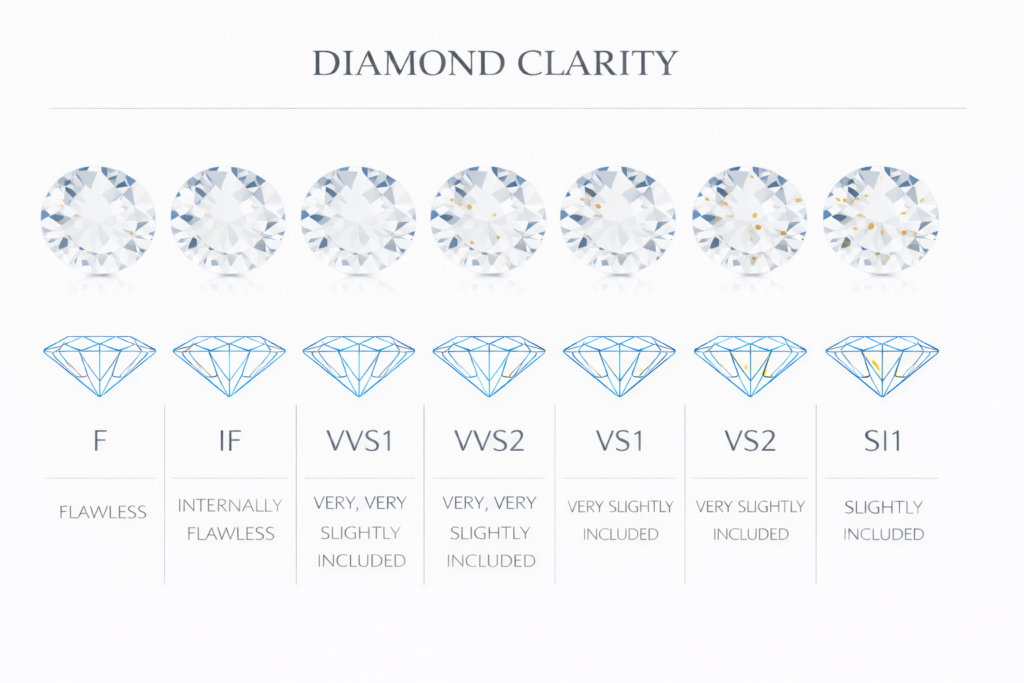
Diamonds are graded on a clarity scale that ranges from flawless to included:
FL / IF (Flawless / Internally Flawless)
No visible inclusions under magnificationVVS1 / VVS2 (Very Very Slightly Included)
Extremely difficult to see inclusionsVS1 / VS2 (Very Slightly Included)
Minor inclusions, often invisible to the naked eyeSI1 / SI2 (Slightly Included)
Inclusions may be visible under magnification, sometimes eye-cleanI1 / I2 / I3 (Included)
Inclusions visible to the naked eye
How To Choose The Right Diamond
What Are Diamond Inclusions?
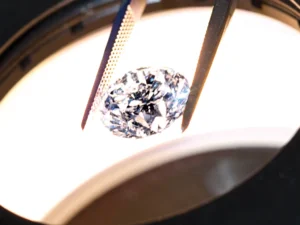 Inclusions are natural features formed during a diamond’s growth. They may appear as tiny crystals, clouds, feathers, or pinpoints.
In most cases, inclusions:
Are microscopic
Do not affect durability
Do not impact sparkle
Their presence makes each diamond unique.
What Are Eye-Clean Diamonds?
An eye-clean diamond is one in which inclusions are not visible without magnification when viewed face-up.
Many diamonds in the VS and SI ranges are eye-clean, making them popular choices for engagement rings and fine jewelry.
Rather than focusing on clarity grades alone, we help clients choose diamonds that look clean and beautiful in everyday wear.
Not Sure Which Clarity You Actually Need?
How Diamond Clarity Affects Appearance
Clarity affects appearance differently depending on:
The size of the diamond
The type of inclusion
Where the inclusion is located
The diamond’s cut and shape
In many cases, inclusions are hidden by sparkle or by the setting itself.
This is why clarity should always be evaluated in context, not just by grade.
Diamond Clarity vs Diamond Color
Which Matters More?
Diamond clarity affects internal characteristics, while diamond color affects overall tone. In many cases, color differences are noticed before clarity differences.
For this reason, many buyers prioritize:
Eye-clean clarity
Strong cut quality
Appropriate color for the setting
Diamond Clarity for Engagement Rings
For engagement rings, clarity is about balance. Most clients want a diamond that looks clean and beautiful without overpaying for microscopic differences.
We often recommend clarity ranges that:
Appear clean to the naked eye
Offer excellent value
Preserve budget for cut quality or size
Choosing an Engagement Ring Is About the Whole Picture
Diamond Clarity in Natural vs Lab-Grown Diamonds
Both natural and lab-grown diamonds are graded using the same clarity standards. However, lab-grown diamonds often have different types of inclusions that form during the growth process.
Regardless of origin, clarity should always be evaluated by how the diamond looks — not by grade alone.
Diamond Clarity and Certification
Clarity grades are documented in independent grading reports issued by respected laboratories such as:
GIA (commonly for natural diamonds)
IGI (commonly for lab-grown diamonds)
Certification ensures transparency and helps buyers compare diamonds accurately.
Diamond Clarity FAQs
Many engagement rings feature diamonds in the VS or SI clarity range that appear eye-clean and offer excellent value.
In most cases, inclusions do not affect durability. Only very large or poorly placed inclusions may raise structural concerns, which we help identify during selection.
Flawless diamonds are rare and expensive, but the visual difference compared to eye-clean diamonds is often minimal. Many buyers prefer to allocate their budget elsewhere.
Most inclusions are microscopic and not visible to the naked eye, especially in well-cut diamonds.
Experience Diamond Clarity in Person
Diamond clarity is best understood when you can compare stones side by side under real lighting conditions. We invite you to visit our Boston showroom or schedule a private appointment for thoughtful, expert guidance.
Popular Products
Trending Now